
Surprise: More adults under age 50 are getting colon or rectal cancer.
The percentage of cases for people under 50 has grown 2.4% every year since 2012, says the American Cancer Society (ACS).
Diagnoses among young adults is expected to double by 2030 to 10.9% of all colon cancers and 22.9% of all rectal cancers, reports the American College of Surgeons.
Rectal cancer accounts for a third (37%) of colorectal cancers among adults under 50, but just a quarter (24%) of colorectal cancers among adults 65+, ACS reports.
The increase in “early onset” colorectal cancer is a dilemma for three reasons:
- Researchers have not yet determined the causes behind the increase, so younger adults don’t have clues to follow.
- Screening guidelines are geared towards older adults, so many younger adults aren’t even thinking about it yet.
- Colon and rectal cancer usually don’t have symptoms at early stages, when treatment can save lives.
“You may not have any signs and you already have colon cancer,” says NH+C surgeon Katya Ericson, MD. “And when symptoms do emerge, the cancer has already progressed.”
Colon and rectal cancer has a 90% survival rate when detected early.
For adults age 20-50, the best approach is to identify your risk, reduce your risk, and get screened.
IDENTIFY your risk
These risks can’t be modified:
- Personal history of polyps – large polyps increase risk 3- to 6-fold
- Family history of cancer or polyps – doubles your risk
- Diabetes – increases risk 30% because high levels of insulin stimulate mucus cell growth in the colon
- Inflammatory bowel disease including Crohn’s Disease and ulcerative colitis – risk is higher when disease is more severe
- Hereditary syndromes such as Lynch Syndrome and Familial Adenomatous Polyposis (FAP) – risk is as much as 90%
- History of abdominal or pelvic radiation for other cancers
“Talking with your family is an important part of identifying your risk,” Dr. Ericson says. Family history of cancer or polyps increases your risk. For adults under 50, the risk jumps even higher if you have a parent or sibling diagnosed with colorectal cancer when they were younger than 50.
Family history of polyps is as important as any past colorectal cancer. “Sometimes families discuss colon cancer, but don’t mention polyps” out of embarrassment or lack of awareness, Dr. Ericson says. “It helps everyone in the family to know their shared history.”
REDUCE your risk
ACS says that about 55% of colorectal cancers can be attributed to modifiable risk factors:
- Excess body weight
- Physical inactivity
- Long-term smoking
- Heavy alcohol consumption
- High consumption of red or processed meat
Take these steps to lower your risk:
Be physically active. Regular exercise can lower your risk of colon cancer about 20%. Aim for at least 30 minutes, 5 times a week.
Eat a balanced diet. Choose fruits and vegetables, whole grains, and lean proteins. Limit how much red meat and processed meat you eat.
Get enough calcium. The American Society of Gastrointestinal Endoscopy recommends 1000-1200 mg of calcium per day to help prevent tumors.
SCREEN for cancer and polyps
Adults at average risk should start screening at age 45, recommends both the American Society of Gastrointestinal Endoscopy and the U.S. Preventive Services Task Force (USPSTF). People at higher risk should start screening at 40.
Screening is designed to detect early-stage colon cancers and precancerous lesions in people who don’t have symptoms. That includes polyps, which can develop into cancer.
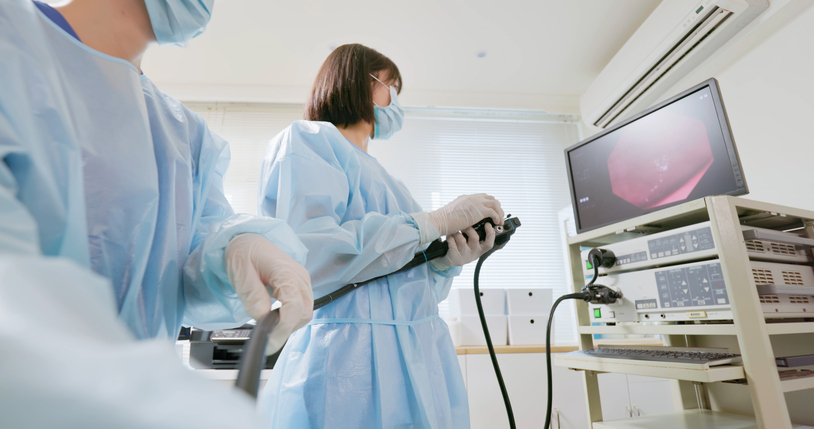
Colonoscopy is the most accurate, thorough screening. Plus, if your doctor finds polyps, they can be removed right away. Have a colonoscopy every 10 years, starting at age 45. If you have polyps or lesions, you should screen again sooner. Talk with your provider about what’s best for you. You can also calculate the right test for your risk, using this tool from the American Society for Gastrointestinal Endoscopy.
Get screened at any age if you have symptoms:
- Rectal bleeding
- Blood in your stool
- Changes in bowel habits (constipation, diarrhea)
- Changes in stool shape
- Abdominal cramps or pain
- Decreased appetite
- Unexplained weight loss
- Feeling like your bowel isn’t empty
Rectal bleeding could be from hemorrhoids or diverticulitis – conditions unrelated to cancer. It’s important to pinpoint the cause.
“If you have rectal bleeding, get it checked out,” Dr. Ericson advises. “If you’ve tried your doctor’s recommendations like a high-fiber diet and the bleeding hasn’t changed, absolutely get screened. The first thing should be a colonoscopy.”
After all, it’s good to be proactive about your health at every age.
Ready for your colonoscopy? We’re ready, too.
Start screening at age 45. (Earlier if your risk is higher.)
NH+C makes it comfortable and convenient. It’s easy to schedule, and you can get an appointment often within the same week. No referral needed.
Two ways to schedule:
- Call 507-646-1201
- New! Schedule online for your screening colonoscopy.
Ask your primary care provider if you’re due (or overdue) for a screening colonoscopy. Your annual physical is a good time to discuss it.
Wherever you get your primary care, you can choose to have your colonoscopy at NH+C.