
Getting Local Cancer Care Was Lifesaving for Tim and Wanda Larsen
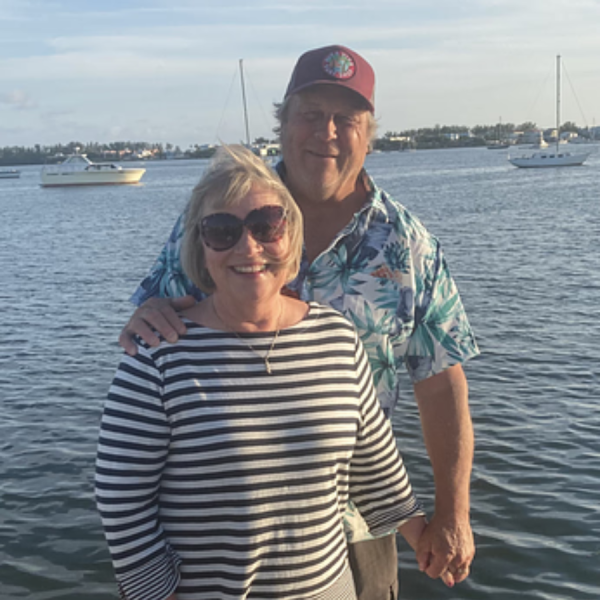
Tim and Wanda Larsen: The Importance of Local Cancer Treatment
When Tim and Wanda talk about their experiences with cancer, they do so with gratitude, emotion, and a deep appreciation for the care they received close to home at the Cancer Care & Infusion Center. Between them, they have faced cancer four times. Every diagnosis, surgery, infusion, and follow-up appointment happened locally.
Both say that mattered more than they ever expected.
Wanda’s Journey: Two Breast Cancer Diagnoses
Wanda was 40 years old when a routine mammogram revealed breast cancer. She underwent a lumpectomy locally and then traveled for radiation treatments. More than two decades later, at 61, another mammogram revealed cancer again.
Her second diagnosis required a mastectomy and chemotherapy.
When she briefly considered receiving treatment in the Twin Cities, the urgency and pace overwhelmed her. They wanted to start chemotherapy right away.
“I just freaked out. I came home and I knew I had to call my oncologist.” She called her oncologist at the Cancer Care & Infusion Center who called her back within minutes and reassured her. “We’re not going to do anything drastic right away. We’re just going to take this step-by-step,” he told her.
That measured, thoughtful approach gave her confidence and stability during a frightening time.
It was not an easy road. She describes fainting episodes, months without being able to eat normally, and medication adjustments along the way. But what stands out most in her memory are the nurses.
“All of those nurses got me through it,” she says. “Lisa, Juliana, Mary and Caroline. I still cry about it because it was a tough journey, but they helped me make it through.”
“I stayed right with Northfield Hospital because I knew my oncologist,” she says. “I couldn’t have gotten better care anywhere else.”
Today, Wanda is cancer-free. She credits excellent medical care, adjustments to her treatment plan, and what her nurses often called her “positive attitude.”
Tim’s Journey: Prostate and Colon Cancer
Tim’s first cancer diagnosis came after years of monitoring his PSA levels. At age 60, a biopsy confirmed prostate cancer. After carefully reviewing options, he had surgery. The cancer was encapsulated, and he did not require chemotherapy. He has had no recurrence.
His second diagnosis was far more dramatic.
What he thought was a pulled muscle turned into escalating pain and, eventually, an emergency room visit. A CT scan revealed what looked like an infection. Tim received antibiotic treatments first during a hospital stay then at the Cancer Care & Infusion Center.
During one of his treatments, nurse Megan didn’t think Tim looked so good. She called in the doctor, and she sent him back to the ER for another CT scan. “Megan saved my life,” Tim recalls.
The CT scan revealed more trouble. His small intestine had gotten very large, and it was blocked. Surgery was needed.
While waiting in the ER, Tim called his good friend who is a doctor in the cities. His friend arranged for Tim to have the surgery the following morning in the cities. But the thought of having to drive up there when he wasn’t feeling well was making Wanda anxious.
Tim had his friend talk to the ER doctor. When Tim got back on the phone, his friend said “You need to have the surgery right now. Don’t wait. You might not make it. They’re going to do the right thing.”
“It went pretty fast,” he says. “I had a great conversation with the surgeon, Dr. Katya Ericson. She explained everything. Then she said, “You ready?” I said, “Sure, let’s do it.”
The surgery revealed colon cancer that had spread to one lymph node. Because Wanda knew the cancer care nurses, she went down there and ran into nurse Caroline. Caroline said, “Wanda, this is not a death sentence. We’ll get a plan going.” Wanda recalls, “Within a week we knew what the plan was. They’re super.”
Chemotherapy followed.
Throughout his hospitalization and treatment, Tim says it was the people who made the difference.
“The nursing staff was fantastic,” he says. “Dr. Kamboj — she’s fabulous,” says Tim. “By the last times we were seeing her, she was giving us hugs,” Wanda said.
He also remembers the smaller, human moments: a nurse noticing he didn’t look well and escalating his care, staff members storing his favorite Italian ice pops in a freezer, a former student greeting Wanda in the cafeteria, a custodian recognizing him in the hallway.
“You’re not just another person,” Wanda says. “They care about you.”
The Importance of Local Cancer Care
For both of them, receiving treatment locally meant more than convenience. It meant familiarity, continuity, and community support.
Traveling for chemotherapy or radiation can involve long drives, unpredictable weather, missed family time, and physical exhaustion layered on top of treatment side effects. Wanda recalls a friend who chose to travel for care.
“She went through snowstorms and it was very difficult on her,” Wanda says. “Later she said, ‘You were right. I should have stayed right here.’”
Local care also meant immediate coordination. After Tim’s emergency surgery, the cancer center team quickly arranged PET scans, follow-ups, and oncology appointments. “They take the worry off of trying to make all the appointments,” Wanda says. “They take that away.”
Tim adds that in a community setting, people take a special interest. “They’re generous with their time and their concern,” he says.
Today, both Tim and Wanda are cancer-free. They describe it as amazing — even miraculous. But they are quick to credit skilled providers, attentive nurses, and coordinated care close to home.
Why Supporting the Northfield Hospital Foundation Matters
Behind every infusion chair, imaging study, and oncology visit is a network of resources that support patients and families. Donations to the Northfield Hospital Foundation support the Cancer Center and help ensure that high-quality care remains available locally. Contributions can fund equipment, patient assistance programs, comfort items during treatment, and services that ease the emotional and financial burden of cancer.
When treatment is close to home, patients are less isolated. They are surrounded by familiar faces, supported by neighbors, and cared for by professionals who know their names and their stories.
Tim sums it up simply: “Can’t say enough about you guys.”
Wanda offers clear advice to anyone deciding where to seek treatment: “Absolutely. If you’re living in this area — go here.”
For them, local cancer care was not just convenient. It was personal, coordinated, and lifesaving.
Learn more about Northfield Hospital Foundation and Cancer Care.