
Sleep Studies
Northfield Hospital + Clinics offer two kinds of sleep tests; a home sleep study and a hospital sleep study.
What is a home sleep study?
A home sleep study (also called a home sleep apnea test) is a simple, overnight test you do in your own bed at home to evaluate how you breathe while you sleep. It uses small sensors placed on your body — on your finger, chest, and under your nose — to track things like airflow, oxygen levels, heart rate, and breathing effort.
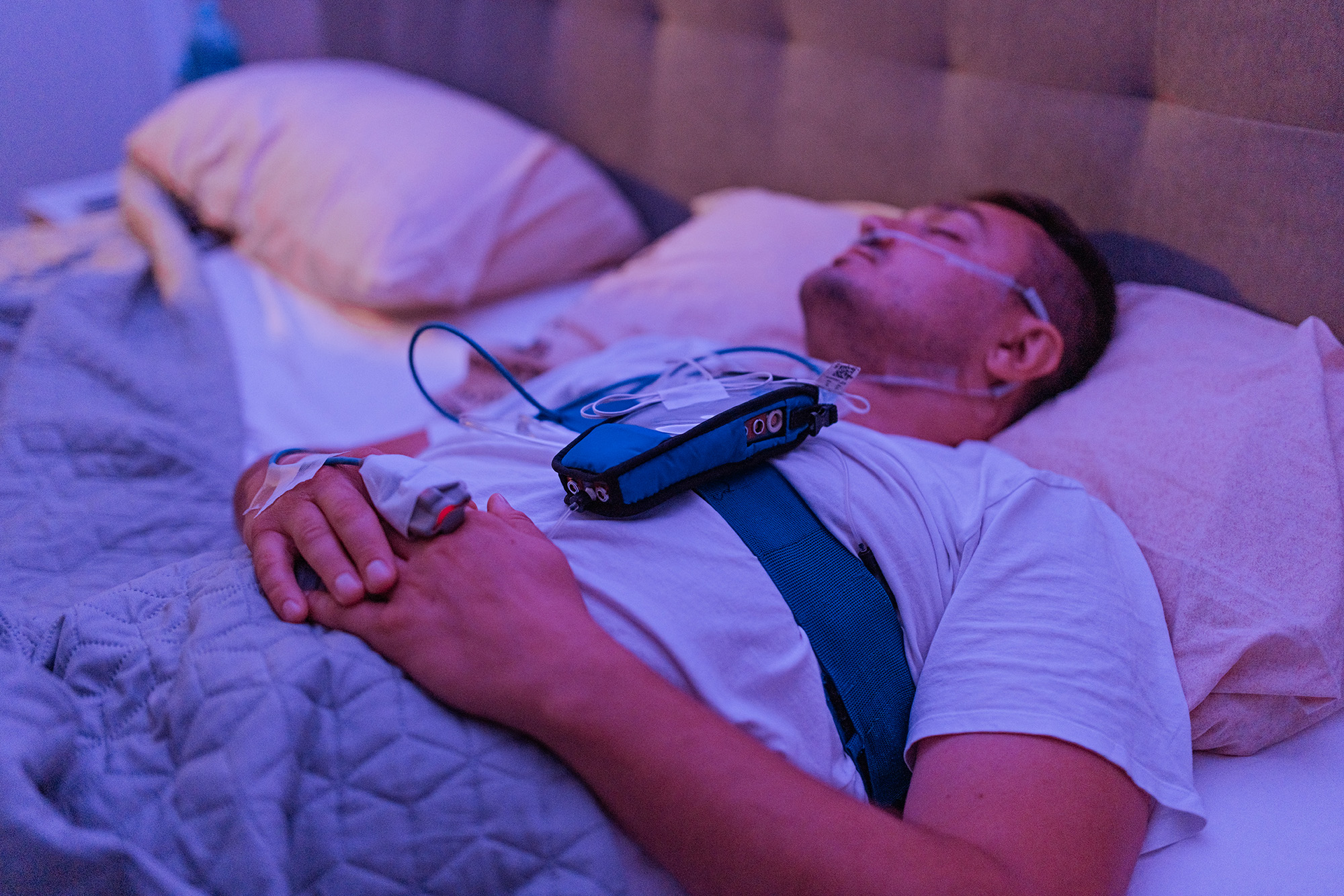
The goal of a home sleep study is to help diagnose conditions such as obstructive sleep apnea, where breathing repeatedly stops and starts during sleep. It is less complex than a hospital sleep study and is usually recommended for people with symptoms like loud snoring, daytime fatigue, or witnessed pauses in breathing.
After the study, the recorded data is reviewed by a healthcare provider or sleep specialist, who determines whether further testing or treatment is needed.
Questions about a home sleep study?
What equipment will I use?
You will be given a small device that will include:
· A soft belt around your chest
· A finger clip to check your oxygen saturation
· A small tube or sensor near your nose
Don’t worry, this equipment is safe and painless.
How Do I Set It Up?
It is not hard to set up. You will receive instructions and a demonstration. Most people complete it successfully with no issues.
What Should I Expect During the Night?
· Go to bed at your usual time
· Sleep in your normal position
· You can move and get up if needed
· You may use the bathroom at night, just disconnect the device if needed and reconnect it
It’s okay if you don’t sleep perfectly. We usually still get useful information.
How should I prepare
Before your study:
· Shower and have clean, dry skin
· Avoid lotions or oils on your skin
· Follow your normal routine
Ask your provider about:
· Caffeine or alcohol use
· Your regular medications
What happens after the study?
· Return the equipment as instructed
· A sleep specialist will review your results
· Your provider will discuss next steps with you
What is a hospital sleep study?
What to expect:
An hospital sleep study is a very relaxed and easy procedure used to diagnose the cause of your sleeping problems. Every effort will be made to assure that you are comfortable and at ease with the surroundings. During the test you will sleep at our fully furnished and comfortable sleep study center.
A sleep study technician arranges sensors to monitor heart rate, oxygen levels and eye movement while you sleep, then monitors you from a workspace outside the sleep suite. The study is done over an eight- to nine-hour period, typically beginning around 8 or 9 p.m.
Patients are usually able to leave by 5 or 6 a.m. and can shower up, get ready for their day and grab a quick snack from the breakfast bar before departing.
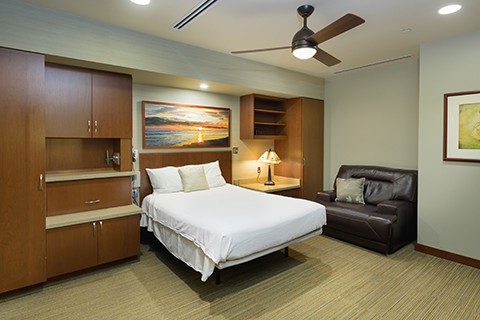
The study is typically divided into four parts:
Preparation - The technician attaches sensors to your head, chest, arms and legs. During this time the technician will explain the study to you and answer any questions you may have. This takes about an hour.
Lights out - We like people in bed between 10-11 p.m. Up until that time you may watch TV, read or use your computer to help you relax. After that time the TV is turned off and the continued use of computers and cell phones is discouraged.
Diagnostic phase - The technician will monitor your breathing patterns, brain waves, eye movements, blood pressure, heart rate and electrical activity of muscles while you sleep. You may be asked to change sleeping positions so that a thorough study can be completed.
CPAP trial phase - If the technician has observed and documented enough events to diagnose obstructive sleep apnea they will wake you to place a CPAP mask and will adjust the CPAP settings to best treat you.
Providers use the results of the study to diagnose the cause of your sleep disorder.